Monday, May 20, 2013

Did Steinbeck Write A Bromance?


I’m not one of these people who look through rainbow-color lenses and sees shades of gay in everything that comes my way, at least I try not to be. But I recently read East of Eden by John Steinbeck, and what I interpreted was an inspiring, non-sexual intimacy between Adam Trask and his Chinese cook/housekeeper Lee.

The main theme for the novel revolves on the translation of the Hebrew word timshel, which appears in the Cain and Abel story in Genesis, when God discusses sin with Cain. It basically means God gave man the ability to choose between good and evil. That is the choice each of East of Eden’s characters face—as does, ultimately, every person. The story puts forth the idea that no matter how deep-rooted a person’s sin, there is always a chance for redemption. Thus, God gave man the ability to overcome evil.

This beautifully crafted novel presents a modern version of the Cain and Able story, where twin brothers (Caleb and Aaron) live with their father (Adam), and Lee cares for the Trask family.  It is clear that Adam is deeply in love with Kate, the mother of the boys. But she abandons the family to become a prostitute shortly after giving birth. For the seventeen years that follow, Lee becomes mother, cook, confidant, money manager, and companion to the boys and to Adam. Lee is unmarried, and shows no interest in women. The intimacy between Adam and Lee grows to a point beyond friendship. It is as close to a gay relationship as Steinbeck could write in his day.

The question that I’m struggling with is did the author intend that relationship to be a romance, or am I reading much more into it than he envisioned.  Not matter what Steinbeck’s intentions, I found both the story and the relationship between Adam and Lee to be brilliant, one of the best reads I’ve had in years. 

Thursday, May 16, 2013

Minnesota Shows Political Courage


Earlier this week Governor Mark Dayton signed a gay marriage bill into law, making Minnesota the twelfth state in the Union to allow marriage equality. Same-sex couples can begin getting married in that state on August 1st.

What a difference a year can make. Last year, Minnesota put a referendum on the ballot to ban same-sex marriage in the state forever. It narrowly lost.

Before the state senate vote, Dayton had encouraged lawmakers to read John F. Kennedy’s Pulitzer Prize winning book Profiles in Courage. I like to think this made a difference. In fact, I’m thinking this book should be required reading for all legislators in the U.S. House and Senate. 

Wednesday, May 15, 2013

Writing Tip - Character Profiles

Do you know what’s in your protagonist’s wallet – how much money, which credit cards, pictures of who? How much do they have in their checking account? Will he wear socks that have a hole in the toe? Will she look into the medicine cabinet at her friend’s house? Do they check out online porn sites? What is their favorite song, flavor of ice cream, cocktail? What was her/his main fear growing up? Which parent did they love most? What is the main driving force in their life, the thing that burns in their belly? What is the thing they are most afraid of? Do they really believe in God or do they just give religion lip service. Who was their first love, their first sexual experience? What habit does their lover have that drives them up a wall?

If you can’t answer these questions, then you don’t know enough about your main characters. Each character has a backstory that drives that character’s motivations and actions. You as a write must know that backstory intimately, even though 90% of it will not show up in the story you are writing. It is all these character traits that determine how your characters will act, what decisions they make, which way they will jump. It’s not enough to know John loves Adam. The writer must know what it is about Adam that attracts John, and why, and also what Adam does the burns John’s ass. To give a character depth, you must know them as well as you know yourself, and certainly better than they know themselves. You are their God, and you see all the way into their heart. Nothing can hide from you.

If you don’t take the time to know your characters – all your main characters – they will seem shallow, one-dimensional. Most readers quickly lose interest in shallow characters. The following is a starting point that I sometimes use in getting to know a character. I’ve known writer who write 30-50 page character profiles. I think that’s overkill, but each writer is different. For minor characters this will probably be enough. For key characters, you will want to add much more meat to the skeleton below. It takes me months to work out an important player, but the following is what I use to start that process.


Physiology:
Sex: Male
Age: 28 H&W: 6’2”, 185
Coloring: Black eyes, black hair, amber skin.
Posture: Dignified, slender yet somewhat muscular, meticulously groomed, stylish clothes.
Defects: none.
Heredity: American-Chinese, second generation.

Sociology:
Class: Lower – wore hand-me-downs until he was thirteen. Family works a farm in Lodi. Put himself through school on scholarships.
Occupation: Doctor.
Education: Just graduated medical school with honors.
Home Life: Lives in an apartment near campus with his lover, Campbell Reardon. He has very little money and depends on Campbell’s money to get by. He doesn’t keep in touch with his parents, who tossed him out because he was gay.
Religion: He is too preoccupied with his personal goals to think about a higher power. Although he has read books on Buddhism and is interested in learning more.
Race: American born Chinese. He takes after his mother in looks and temperament.
Community: He feels comfortable in the medical community and the gay community. He is not ashamed of his family’s humble life, but he is determined to be successful. He doesn’t like the limelight, and doesn’t like to be in groups.
Politics: Flaming liberal. Green all the way. Thinks Bush should be tried for war crimes against humanity for the Iraq invasion.
Hobbies: A voracious reader of detective stores, but he always reads the last five pages first, then reads the book. Plays tennis, which is how he met Campbell.

Psychology:
Character Type: Hero – He’s not perfect, but confident about his skills and takes actions without hesitation. He is the bright side of human nature.
Sex Life: Openly gay. He believes in monogamous relationships. He loves his partner, Campbell, and wants them to marry.
Morality: Anything goes, but there is no need to flaunt it or hide it.
Ambition: He wants to serve the community by being a pediatric doctor. Although he dreams about going into research and finding a cure for cancer or AIDS, he has a deep feeling of wanting to help children. .
Temperament: Fun-loving. He likes having fun and making other people happy.
Frustrations: The fact that Campbell refuses to come out. Winston wants to live in an open, loving gay relationship with Campbell, but Campbell is afraid of his family finding out.
Contradictions: He wants to support Campbell and his family, yet he wants Campbell to be open about their relationship.
I.Q.: Much higher than normal, but he consciously tries not to flaunt it.
Superstitions: Things always happen in threes. No such thing as luck – you get what you want by working hard for it. He wears a lucky coin his mother once gave him, but not for the luck. He also puts much faith in Chinese medicine, particularly Acupressure and Acupuncture.
1st love: His boyfriend, Campbell. They have lived together for months, and Winston wants to take it the next step: marriage.
Sanctuary: The pediatric ward. He loves spending his time helping the children.
Favorite Color: Blue, the color of Campbell’s eyes.
Favorite Music: Cool jazz, but also likes Italian opera.
Drug of choice: Gray Goose Vodka.
Ruling Passion: He will do anything not to hurt the people he loves, even if it means tremendous self-sacrifice.
Fatal Flaw: He expects the world, and especially his family, to revolve around him because he is doing what is – in his mind - right.
His Problem: He wants desperately to marry Campbell, but Campbell is going down a path that will tear them apart.
His transition: He comes to realize that he has the knowledge to expose Blake to keep Campbell from leaving him, but to do that, he will certainly hurt Campbell as well. He decides to give up Campbell rather than hurt him.

Six Key Questions:
1. Is he the protagonist? Yes.
2. What does he want? He wants to marry Campbell and live openly while treating children and helping the community.
3. Why does he want it? Because he feels he should have every right that straight people have, to marry the person he loves.
4. What happens if he fails? He will be crushed, but he won’t slink away to the closet.
5. How does he change? He realizes that living openly, and raising a family is more important to him than Campbell.
6. What is he most afraid of? Losing his integrity.

Thursday, May 9, 2013

The Flipside of Joining a Book Club


I joined a book club a year ago when I first moved to Palm Springs. The group consists of fifteen retired gay men who are well read.  We meet once per month at a member’s house—we all take turns hosting—and the host that month offers up three selections for the next month, which we vote on to select one of the three.

There are a number of benefits; the most obvious is the social opportunities to hang out with a number of gay men my own age who also love books. And because other people offer up what they think are good reads, I have the opportunity to read at least one book per month that I normally would not have known about. It’s a great way to broaden one’s literary horizon.

Of course, the flip side of at opportunity is that occasionally we end up reading something that is a waste of time. Tonight we are meeting at my house to discuss such a book.

The book is a series of vignettes depicting one gay man’s sexual experience from boyhood until he finally accepts, and is comfortable with, his sexuality. The problem I had with this book is not that it’s not well written in terms of sentence structure and word selection. It reads well. The problem is that there is no conflict. Each story is a positive experience, start to finish, with no hurtles to over come. In short, it was repetitive and boring as dirt.

The book reads like an erotica novel, only the author chose not to describe the sex scenes. But it wasn’t boring from lack of sex (I normally detest explicit sex in novels) but rather from lack of conflict, which means lack of drama.

The problem that I’m now chewing on is how to convey that to the group tonight without looking like some A-hole writer ragging on another author’s work. Perhaps I’ll just sit quietly and stay the hell off my soapbox.

My three options for the group to vote on:
Call Me by Your Name by Andre Aciman
Wool by Hugh Howey
YU by Joy Shayne Laughter


Wednesday, May 8, 2013

Writing Tip: Your Protagonist Should Arc

Most, if not all, of your main characters should have some sort of arc, but let’s focus on the protagonist, because that’s who your story is about, and who should have the most dramatic arc.

What is an arc? It’s how a character changes from beginning to end. Stories are usually about a protag’s journey through a set of circumstances that are so powerful that they change him/her in some deep and meaningful way. In Lawrence of Arabia, Lawrence starts with a passion to avoid bloodshed; later, he comes to enjoy killing. In Casablanca, Rick steadfastly refuses to stick his neck out for anyone, yet by the end he risks his life and gives up the woman he loves in order to help the resistance.

The character arc is really what’s at the heart of a good story. What it takes to move the character from point A to point B is the story. If the character doesn’t change, you have no story.

Likewise, if you have other characters who have a more dramatic arc than your protag, they will overshadow the protag. And perhaps it’s really their story and you’ve chosen the wrong protag?

There are some famous characters who never arc. James Bond, for instance, never really changes from beginning to end. The same is true for many well-known detectives like Sherlock Holmes. That is one reason I’ve never warmed up to mystery novels. I think they’re boring. If the situation the protag battles is not somehow life-changing, then why bother? If it doesn’t affect them enough to change them in some meaningful way, why should it mean anything to me, the reader?

There is one gay mystery writer, whom I will not name, who writes a series of books, all with the same characters who never change. I’ve read several, and though he writes beautiful prose, the stories are dead boring. The protag solves the puzzle and that’s it. His protag always stands outside the story looking in, not really involved and has no person stake in the outcome.

Yet, I’ve read several mysteries where the detective does have a huge personal stake, where s/he is pulled into a life-threatening position and goes through an arc while solving the mystery. So it can be done, and it makes for a much better, IMHO, read.

Most readers want someone who is involved, who has a huge personal stake in the outcome, so much so that it changes how they see and interact with the world.

Character transformation is critical. Readers want goodness and justice to triumph, but we also want the characters to figure something out about themselves, become something they were not at the beginning (hopefully something that makes them a more complete person.)

I know some very talent writers who first determine how they want their main characters to be at the end of their story, then they make them exactly the opposite at the beginning, and try to figure out what must happen to change them so dramatically. Scrooge is the classic example of this. It took three ghosts and some hair-raising insights to turn him from a miserable miser into a generous and joyous person. But he arced from totally opposite poles within the span of the story.

These changes are internal, and to understand how your protag changes, you must have a very clear and detailed idea of their internal makeup at each point of your story. That means knowing your protag inside and out, and how each different adventure affects him/her. For me, that means creating comprehensive character profiles, not only for my protag, but for all my main characters. That takes work, but then, nobody ever said writing was easy.

Tuesday, May 7, 2013

Holding Your New Baby for the First Time


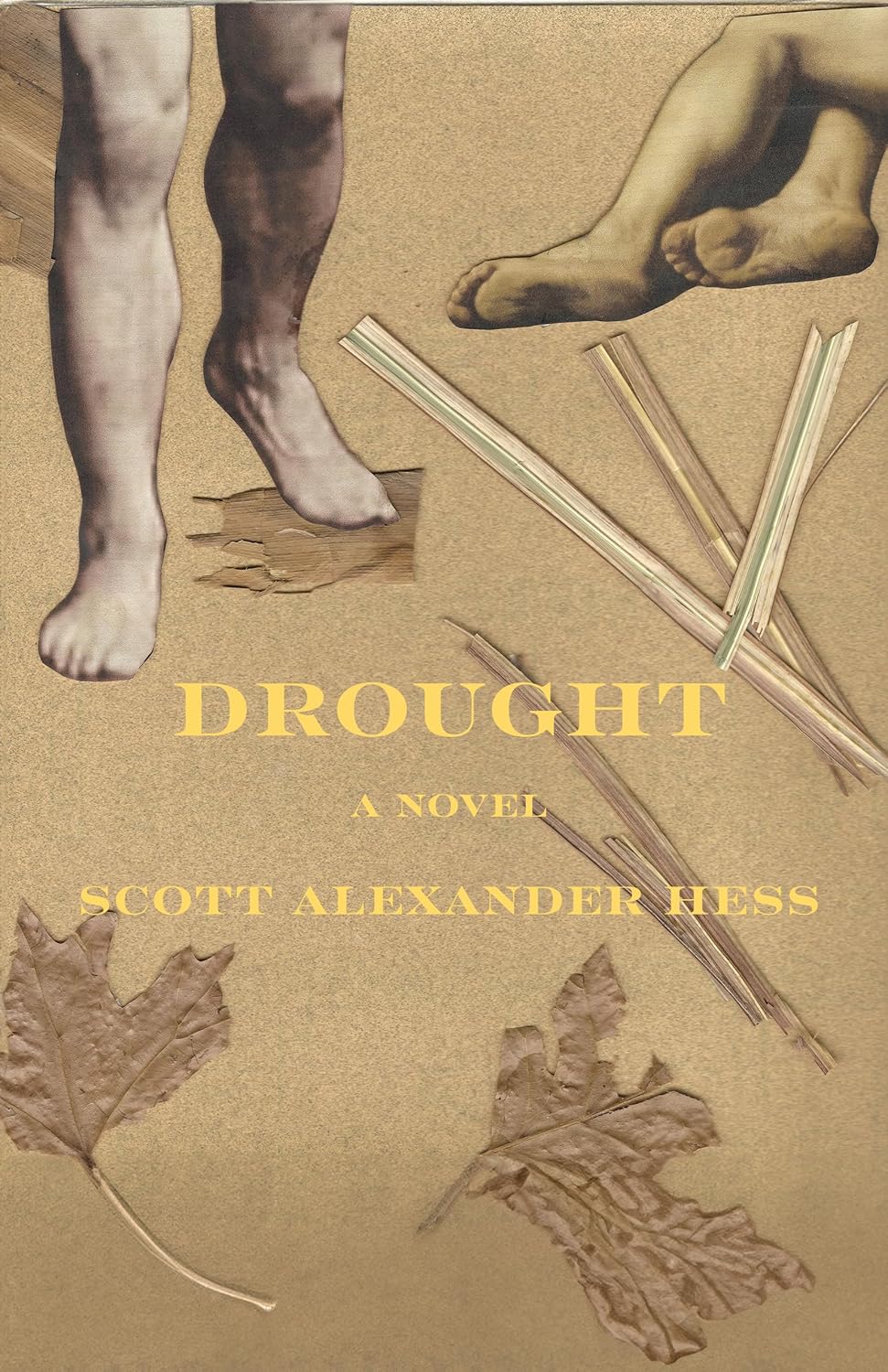
I had a surprise show up via UPS over the weekend: a box containing a few dozen copies of my latest book, The Plain Of Bitter Honey.

Bitter Honey is my seventh novel, so I’ve been around this particular block six times before, yet, when I held that copy for the first time, admiring the beautiful cover, thumbing through the pages, inhaling the musty combination of paper and ink, I became as thrilled as I was five years ago when I held my first novel, Island Song, for the first time. I guess it’s a buzz that never diminishes, at least I hope so.

I suppose all novelists think their latest book is their best, grandest work. I have thought that with each of my stories. To me, they are like stair steps, each higher and better than the last, leading to some unknown destination.

For the first time, I feel I have created a ‘body of work’. Seven published novels, one more to finish this year, and a collection of short stories that I also hope to complete this year, feels like I’ve accomplished some personal goal.  It finally feels like I’ve become a writer, the type of writer I dreamed of becoming fifteen years ago when I began this journey.

The book doesn’t release until next month, but it has gone to press and it has already earned two five-star reviews. I’m very excited to learn the reader reactions to the story. It is a departure from my previous six books. It is a futurist tale, it is not a romance, and for the first time, the protagonist is not gay. So I’m wondering if my readers will accept my new direction or will I need to build a new readership from scratch.

In the meantime, I get to hold and smell and read my new book. I love this feeling. 

Monday, May 6, 2013

The Old Masters


I have a library full of leather-bound books from dead masters, and for years they stood in rows untouched because I was always too busy reading the latest lgbtq book to hit the racks.

But this year I committed myself to reading the masters, one by one, until I’ve read each one on the shelves. I must say, I’m loving them so far.  I started with Tennessee Williams, reading several of his plays. Then I moved to Steinbeck, reading Cannery Row and now East of Eden.  Once I make it through The Winter of Out Discontent and The Grapes of Wrath, I’ll move on to Hemingway.

I have no idea what effect these brilliant writers have on my own writing, but I’m loving reading them. I’m finally at a point where I can really appreciate the way they crafted their stories, created interesting characters, and their superb selection of words.

So from now on I’m reading two books at once, one old and one new.